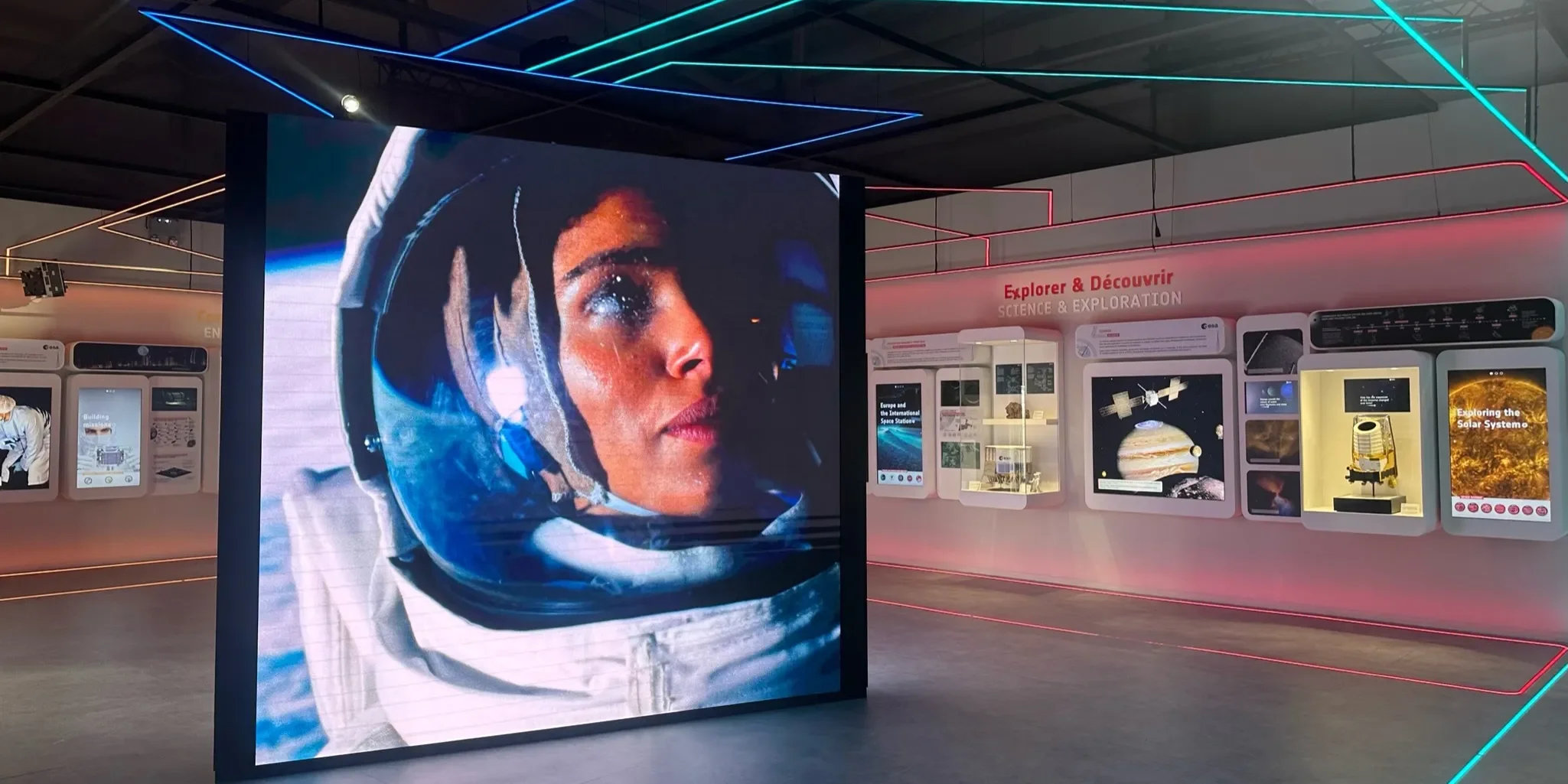
In June 2023 the ESA Pavilion opened its doors for a week during the Le Bourget Paris Air Show. More than 20,000 public visitors had the chance to explore and immerse themselves in the ESA Ambition program, which aims to look into the untapped potential of Space to help address the many future challenges our world is facing.
I worked closely with AES, Any:Time architects and the ESA team responsible for delivering the pavilion in order to create a cohesive visual and interaction concept for the space. The space is divided into the different pillars of ESA with a central triangular LED monolith located in the center of the pavilion. A light canopy, inspired mainly by circuit design, provides connections and live visual cues between the individual pillars and the center structure. Each pillar has a mix of real-time, static (objects) and print content—the central triangular LED structure provides a canvas for a real-time line system inspired by the visual identity of the ESA Ambition program that blends seamlessly with satellite images, videos and key messages illustrating the challenges we are facing and the steps that need to be made in order to ensure a sustainable future for our planet. The pavilion also featured a special mode that could be triggered at selected times where the monolith and light canopy structure would render effects and content in sync for around three minutes, offering a more immersive experience.
I developed the software for controlling the light canopy structure and the application driving the triangular center piece. I used C++ and Cinder under Linux for the development of both apps since the light effects are captured directly from a Blackmagic card and mapped to the LEDs through a separate controller. The monolith app renders a 3D real-time GLSL line system with a separate camera for each side that travels inside this space zooming into ESA content and key messages. Monolith and light canopy communicate through OSC for synchronising their special mode choreography.
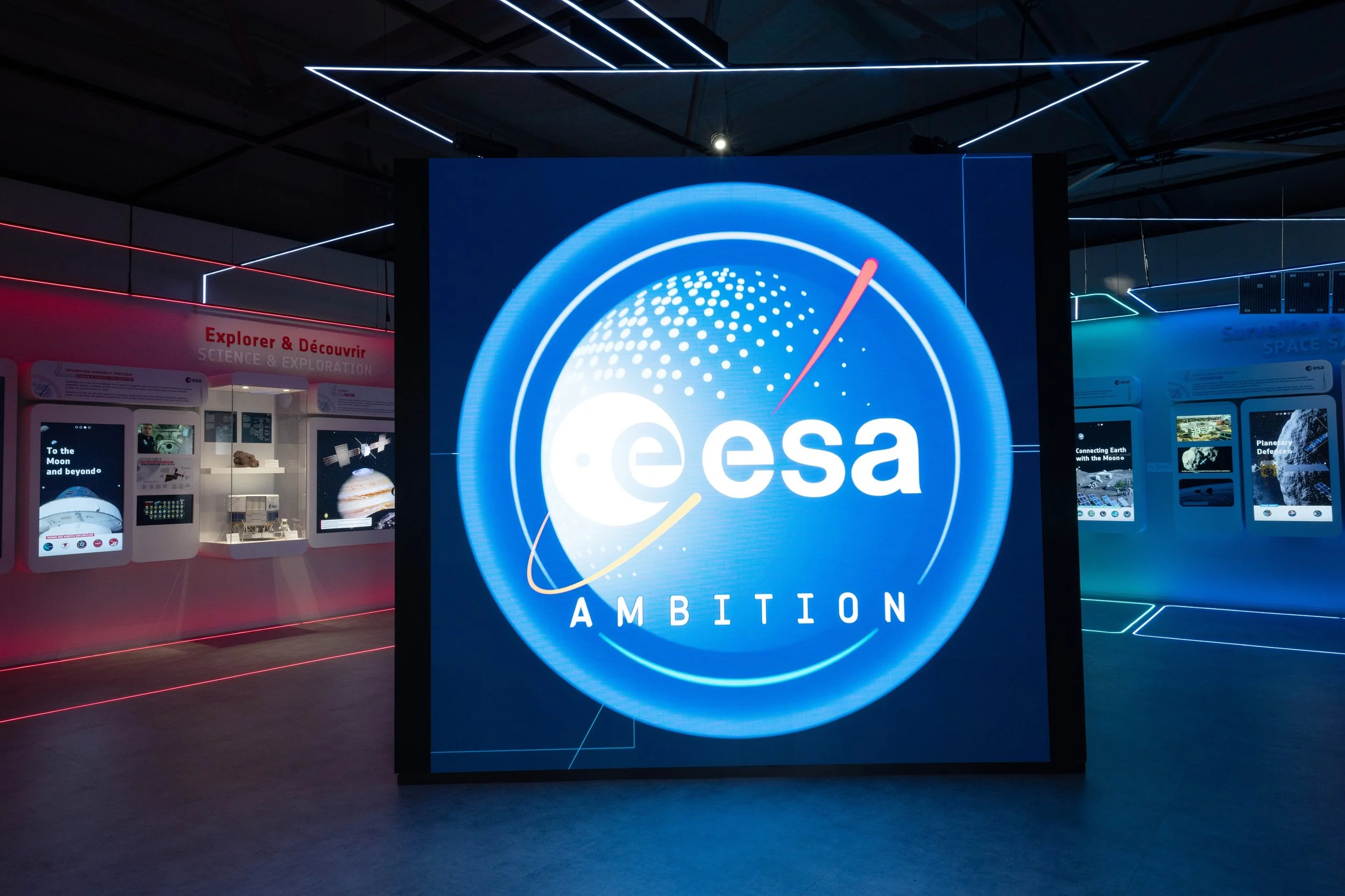
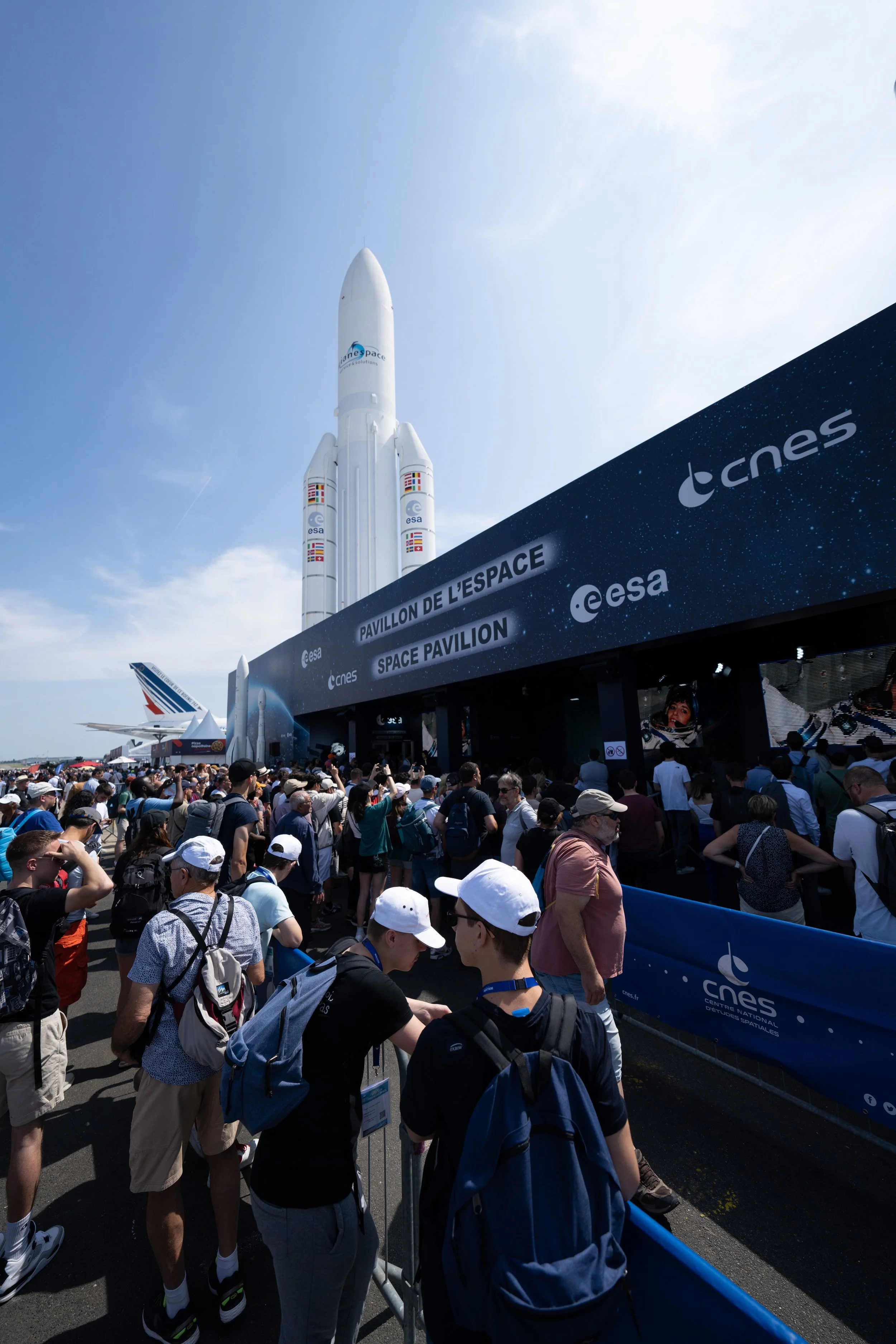
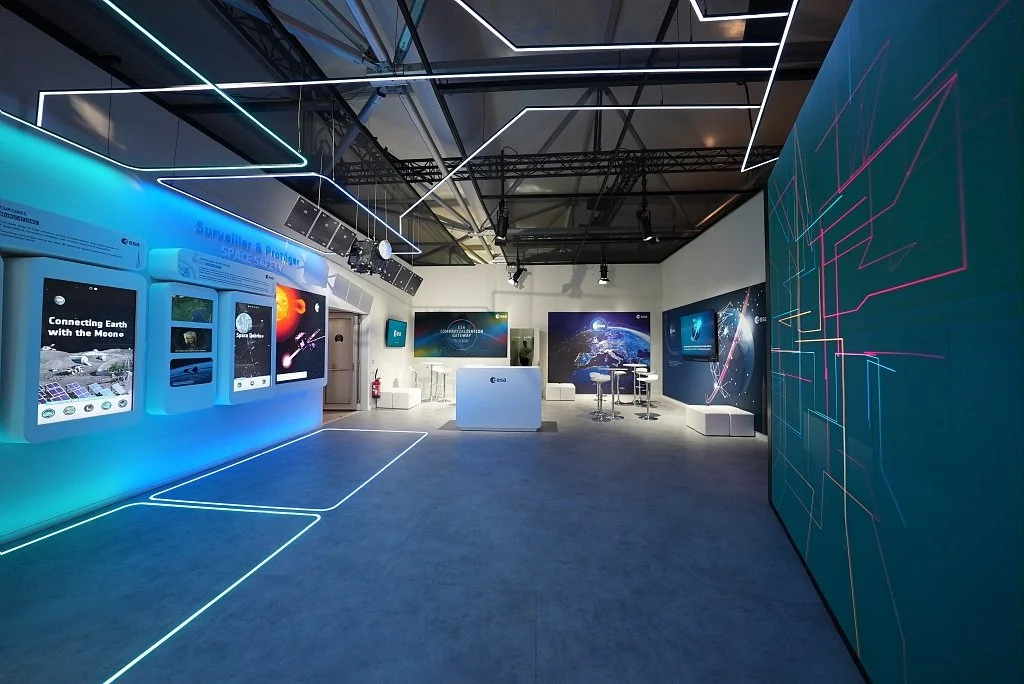
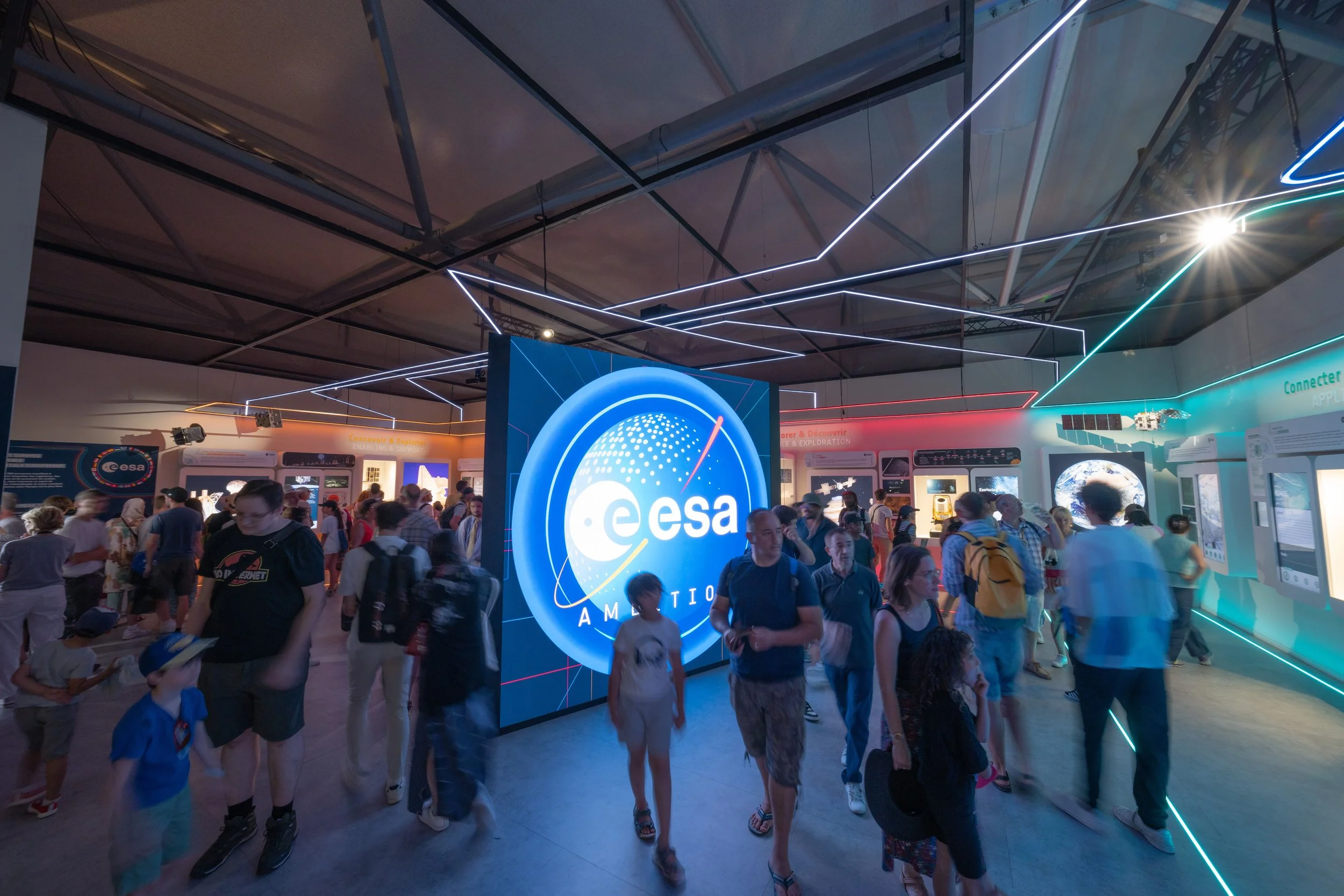

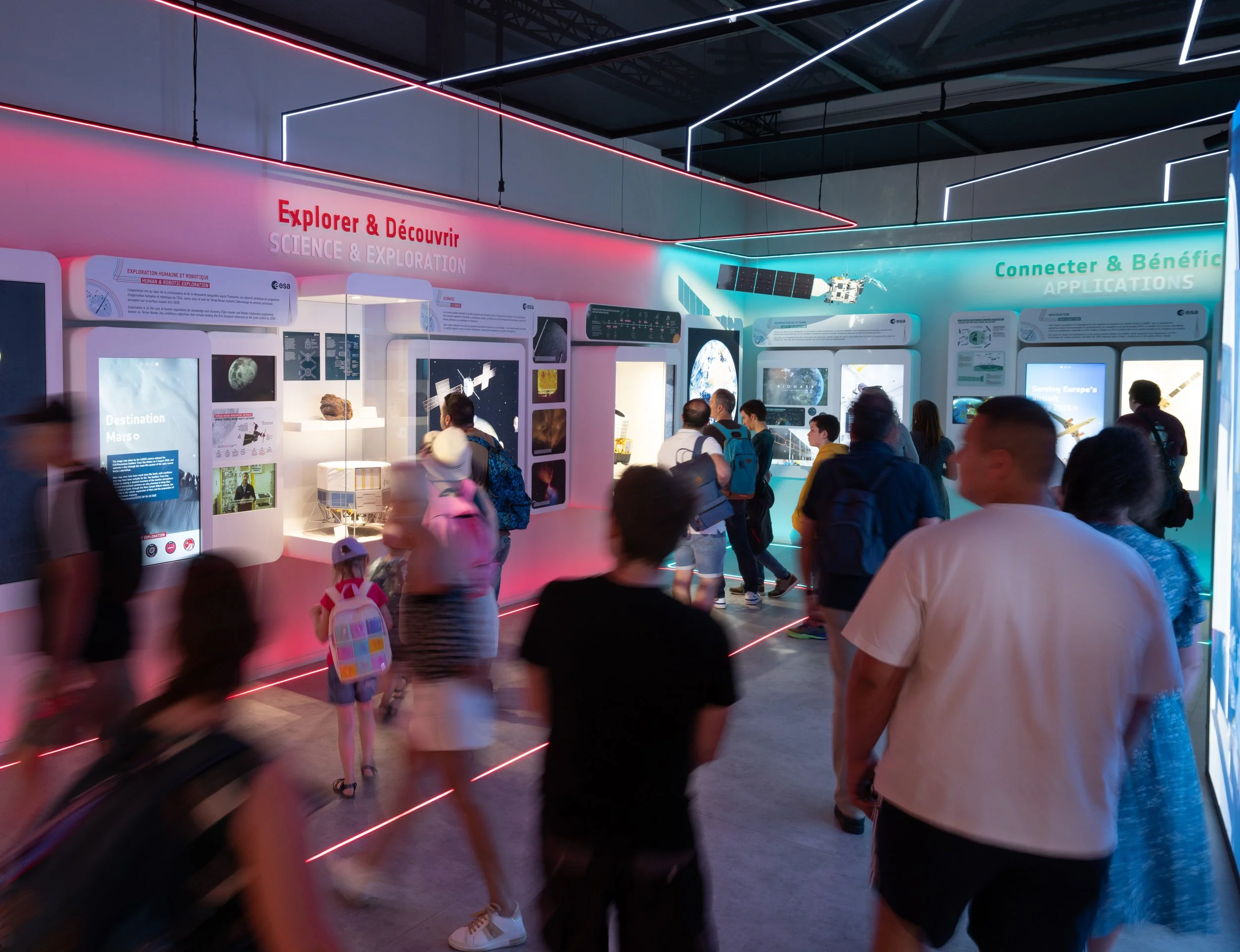
Image Credits: copyright ESA / CNES - P. Sebirot
Quisque iaculis facilisis lacinia. Mauris euismod pellentesque tellus sit amet mollis.