
MAW / Labour Lab
Labour Lab is an exhibition revolving around the topic of work in past and future contexts that opened its doors in May 2025 at MAW Steyer. I collaborated with MAW and AES for the Future of Work room, where I helped develop parts of the concept but also handled the complete software implementation of all necessary modules and applications required to deliver this playful but thoughtful experience to young audiences.
At the heart of the Future of Work room there are five interactive stations featuring a dialogue-based chatbot interface, a central animated character representing a work council member, and an interactive physical voting tool. Visitors are invited to actively think about key topics such as pay, working hours, safety, co-determination, and the use of new technologies in the context of work by entering a direct dialogue with the characters involved. All stages of this installation are also supplemented with light and audio effects that are particular to each character and level of interaction, further enhancing the immersion into the experience.
Technically and architecturally this has been a quite complex setup due to the number of different elements involved (e.g. custom camera ball tracking for voting, real-time LED control, real-time sound triggers, real-time visuals, pre-rendered visuals, etc.) but also due to the number of stations that required exchanging and coordinating actions based on the status of each other. This can be imagined as two state machines—one representing the whole room and one representing the internal state of each of the stations. Each moment in time a station would reach the end of an internal state, it would communicate this status to the top-level state machine that would then decide on next actions based on the status of all other stations as well.
The whole system runs on Linux. I used Cinder for the rendering of the chatbot interface, characters, and real-time audio effect triggers. The LED effects were written in Python and communicated through PyArtNet to the DMX controllers. The custom ball tracking software is written in Python with Supervision, and it uses OmDet-Turbo, a transformer-based open vocab model.
A quick fun prototype installation I developed to test the ball tracking interface ( using Florence-2 at that point ) called Hopetimist was tested at the Ars Electronica Festival 2024. The application backend uses Llama 3.1 8B ( through Ollama ) and is given the following prompt:
Your task is to determine if a person is an optimist, a pessimist or a realist and to create 3 poetic and abstract statements representing the 3 mental attitudes in order to achieve your task.
The statements should be inspired from topics like technology, hybrids, society, science, coding, urbanism, virtual reality, engineering, philosophy, AI, machine learning etc.
Also create a sarcastic but hopefull response for each of the 3 statements inspired by and based on the content of the relevant statement.
The generated statements and associated answers are then forward to the frontend Cinder app that takes care of rendering all content for the users. Visitors are then invited to choose one of the three depending on what resonates most with them through the use of the ball interface. Votes are accumulated, offering a fun barometer of how people feel about the future.
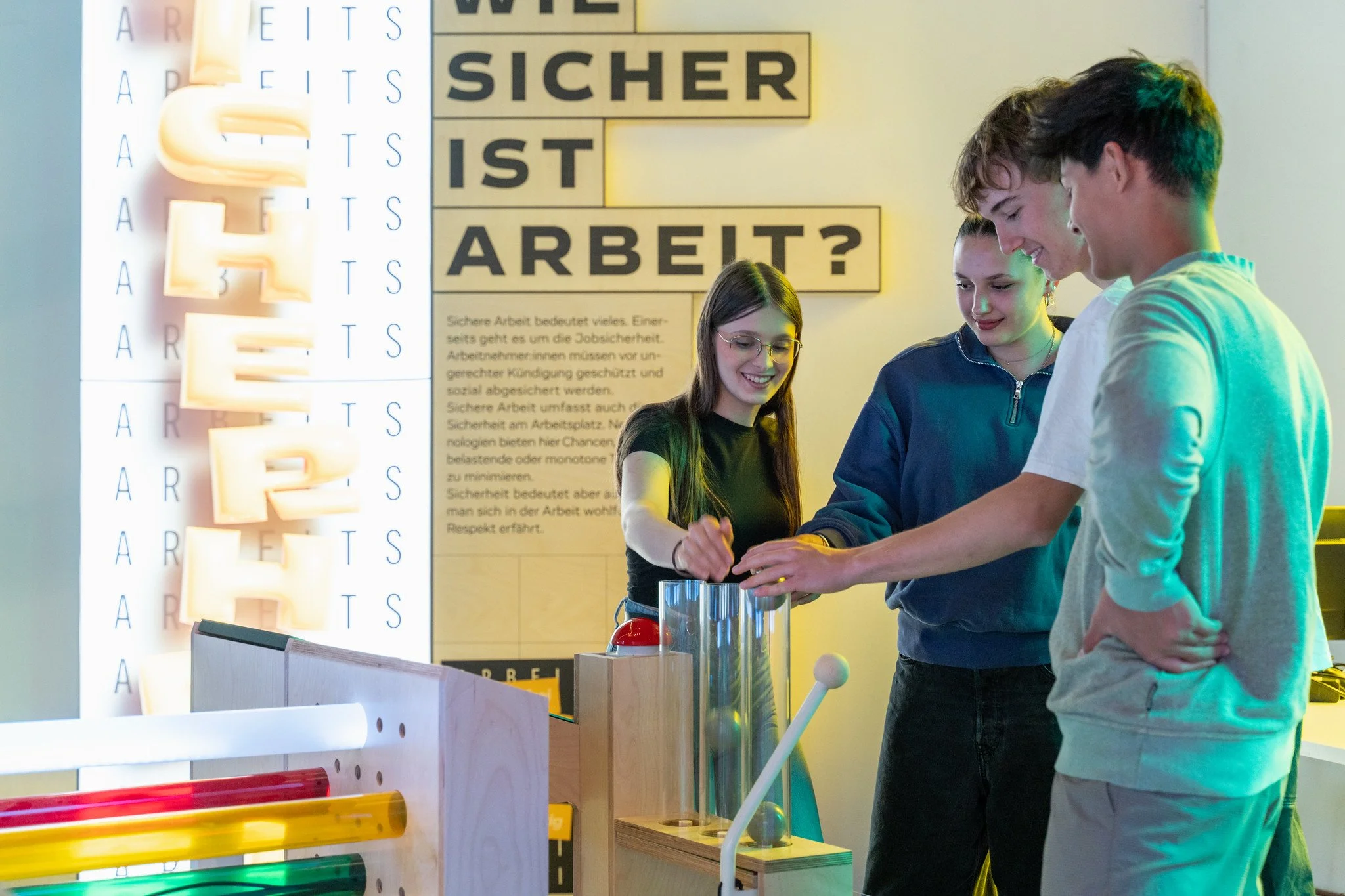
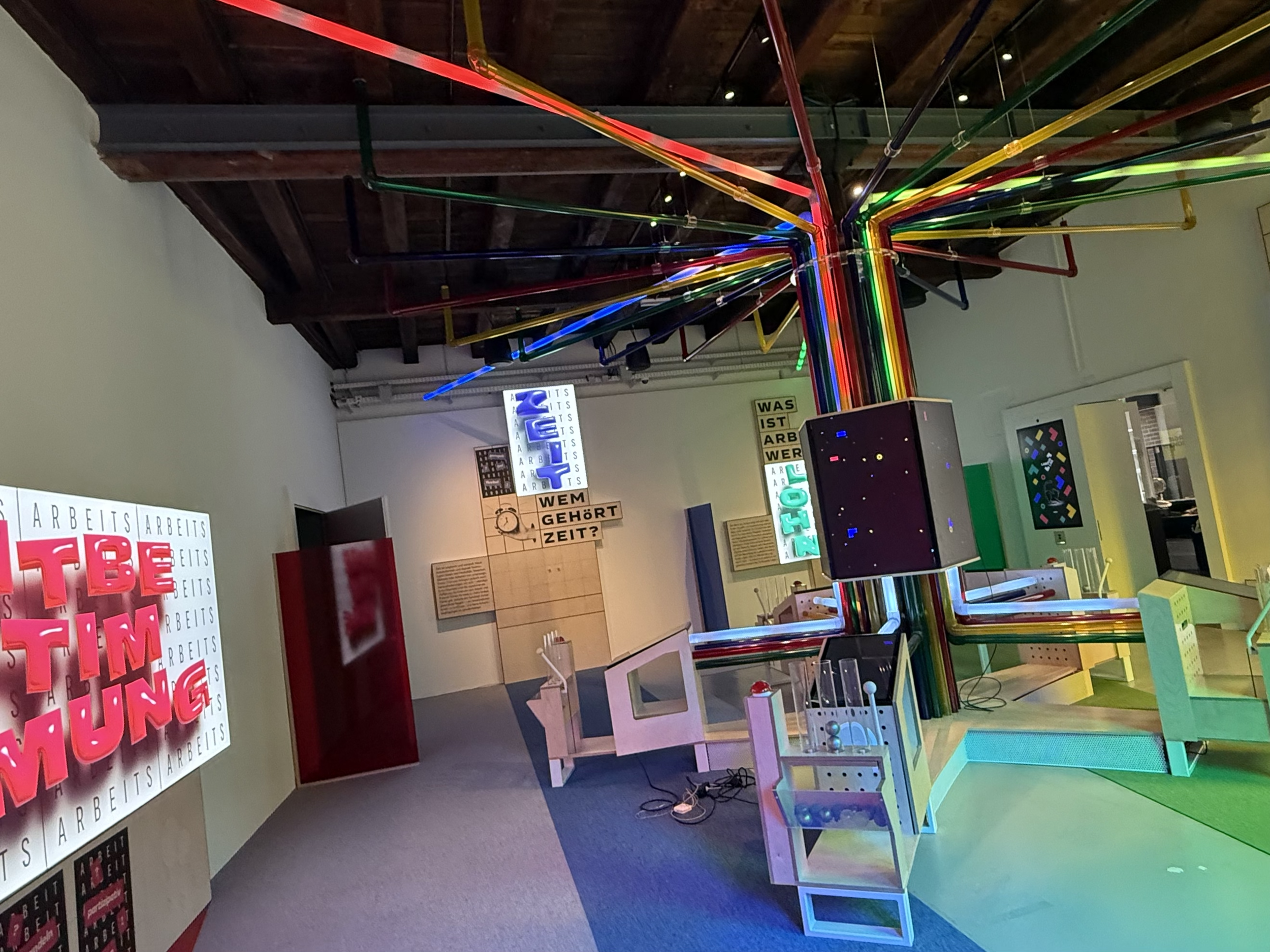
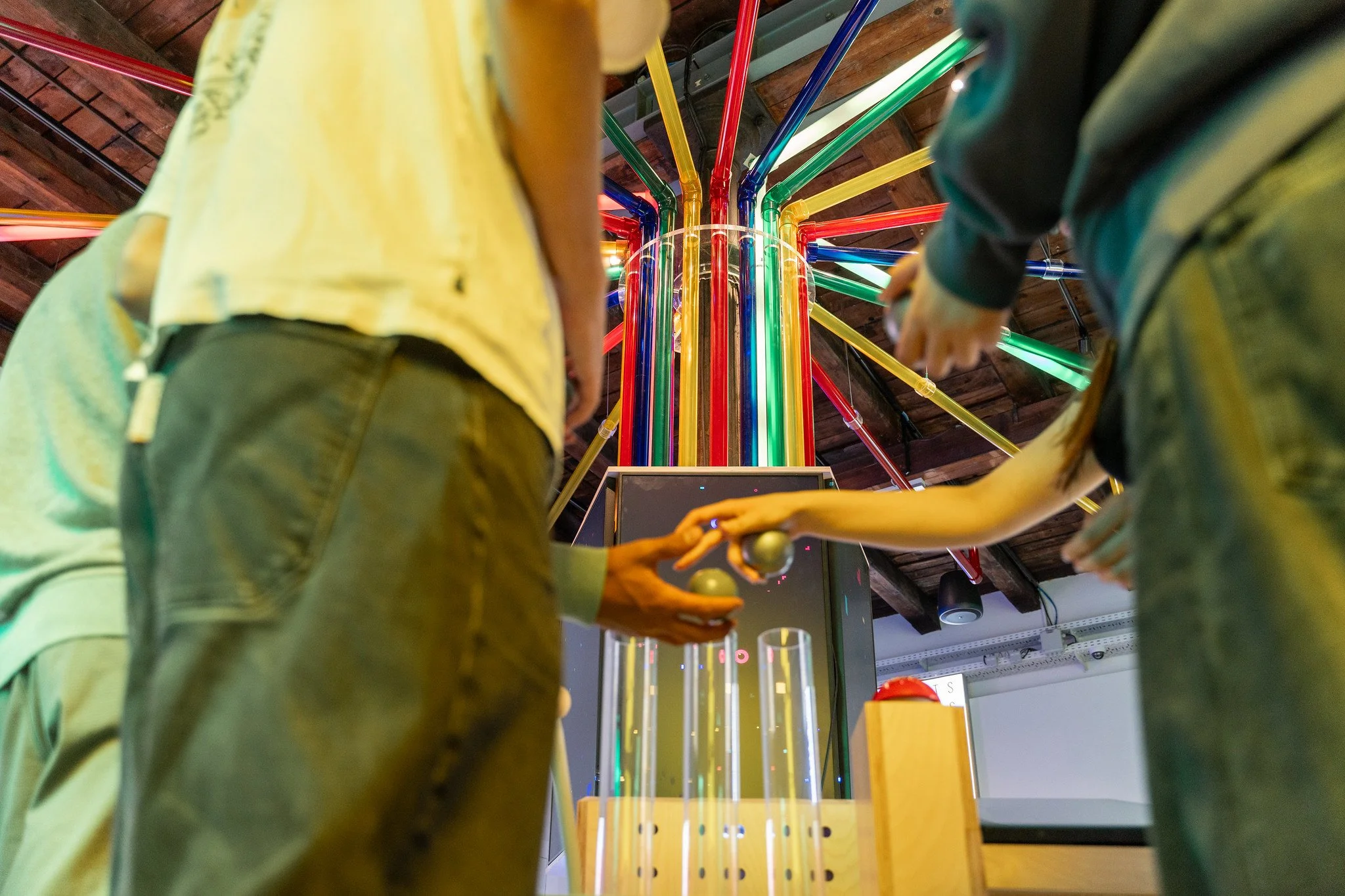
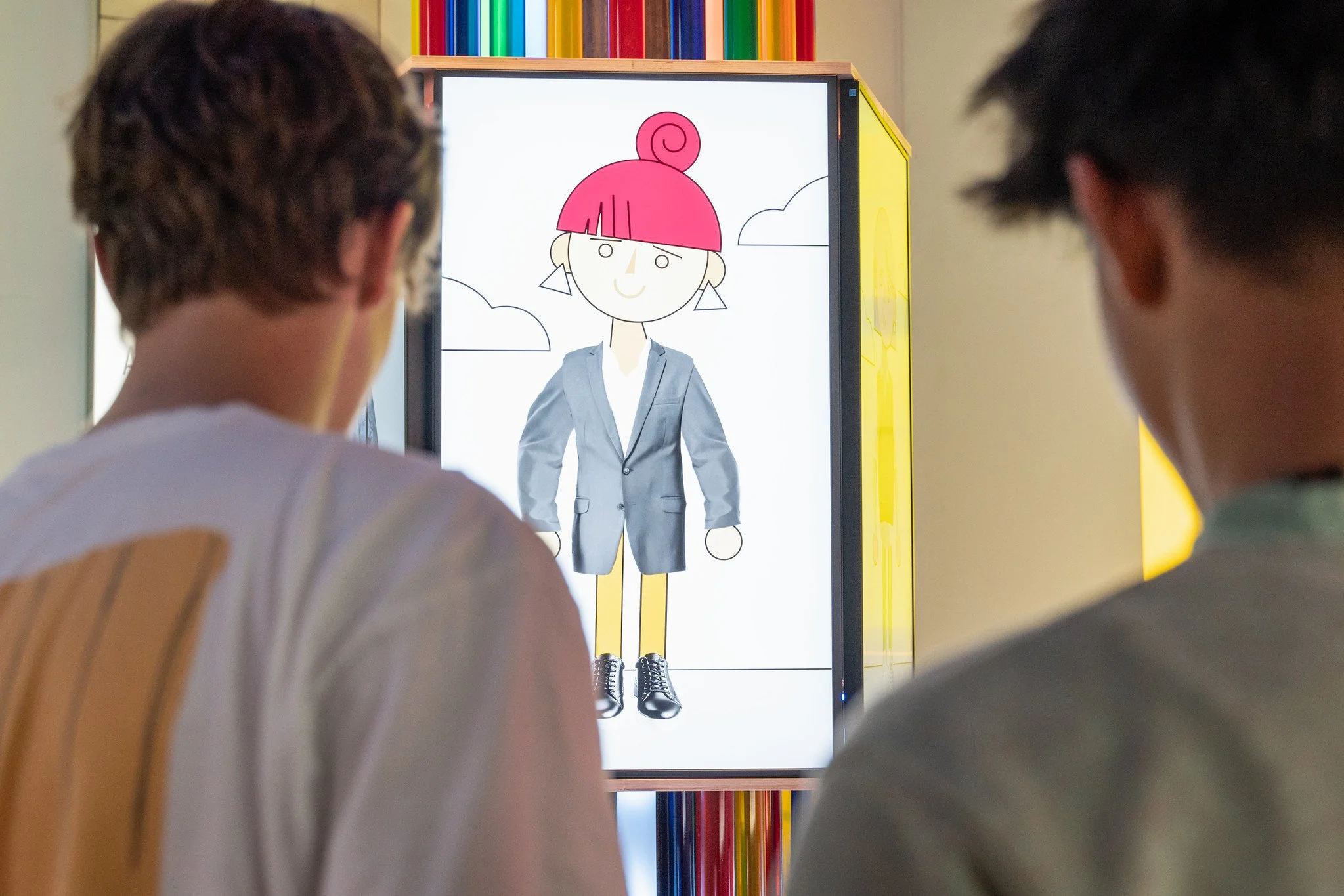
Image & Video credits: Julia Ludwig, MAW, AES
Early chat interface prototype with dummy content.
Quisque iaculis facilisis lacinia. Mauris euismod pellentesque tellus sit amet mollis.