Samurai Museum Berlin - SMB
SMB opened its doors in May 2022. It is home to the largest collection of authentic Japanese and Samurai cultural artefacts in Europe, assembled with love, respect, and appreciation over multiple decades by private collector Peter Janssen. It covers an area of 1500 square meters and hosts a multitude of different artefacts ranging from masks and full body armours to swords, tsubas, and other elements of that era, paired with interactive stations and installations that visitors can use to delve deeper into the subject. I worked as an external partner with Ars Electronica Solutions on the concept and implementation of two installations for this project, namely the Japan Table and the Sword Table.
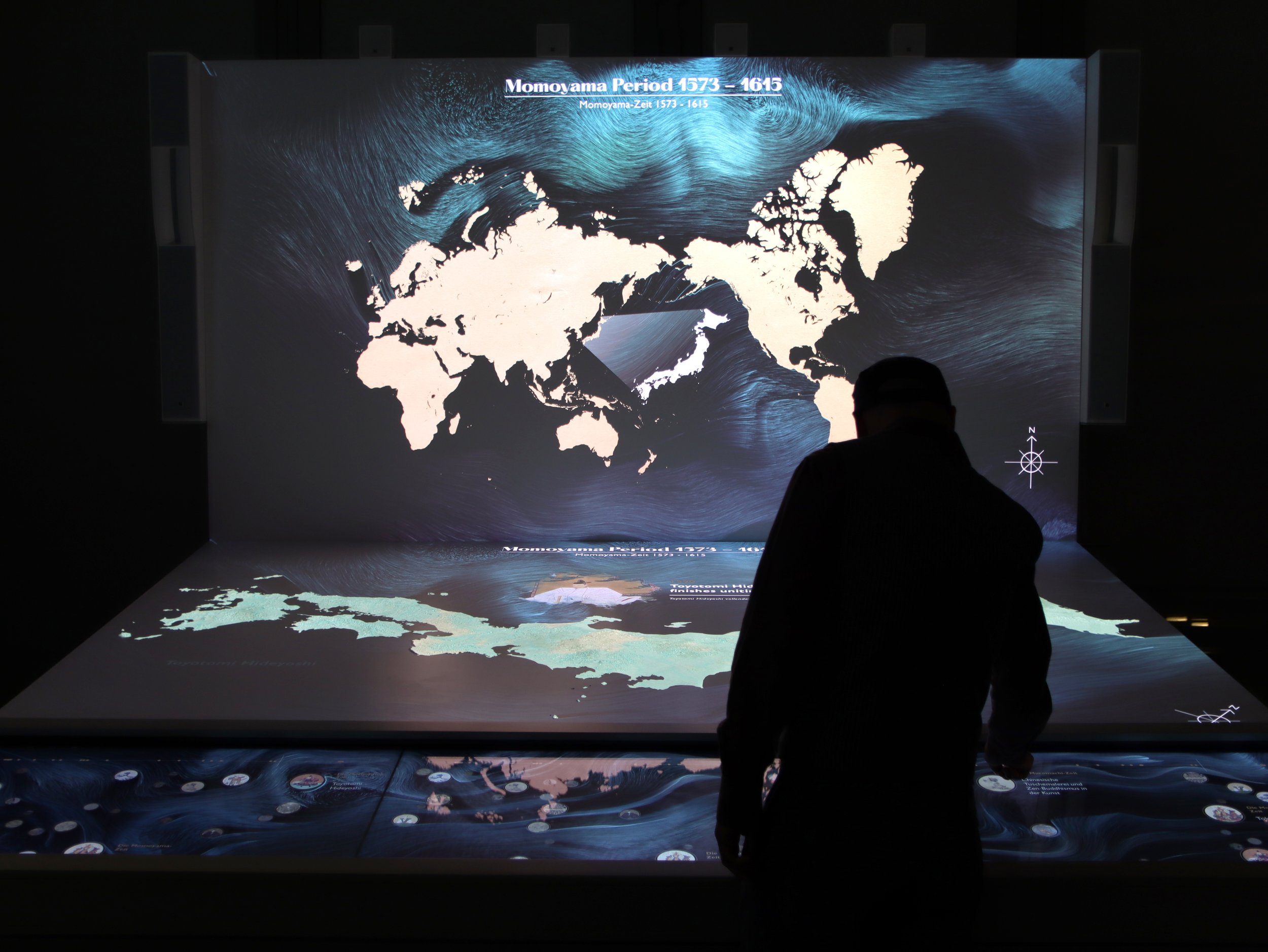
The Japan Table installation is a mix of screens and projections covering a large area of the entrance of the museum. It spans a UI screen area of three times 4K and two 4K projection areas where a separate application takes care of visualising various elements of the history of Japan and Samurai culture. The projection area directly in front of the user is an actual CNC'd elevation model of Japan where various real-time and pre-rendered visuals are displayed. The second projection area is a flat surface directly opposite the user, acting as a canvas for displaying worldwide related content from that specific era of human history.
The Sword Table is located on the first floor of the museum, and its aim is to illustrate the craftsmanship and meticulous process of Samurai sword making. Five stations positioned next to each other, representing the different stages of the sword making process, can be independently activated when a visitor passes or stands in front of them. The moment a visitor approaches one of the stations, a light box activates that holds actual artefacts from that specific part of the process. In parallel, visuals are projected and mapped onto different 3D printed elements representing the various stages of Samurai sword making, completing the storytelling with a mix of real-time particle systems and pre-rendered footage.
In terms of development, I had sole responsibility for both installations. The applications were developed with Cinder (C++/OpenGL) under Linux—I wrote a custom curl-noise transform feedback system, with various controllable parameters, to handle both the sea in the Japan Table and the fire particles in the Sword Table in order to save some development time. The Japan Table is in reality two different applications, one for the UI part and one for the elevation model and wall projections, communicating between them through OSC. The Japan Table UI app utilises Box2D to render the content bubbles as physics particles that collide and react to each other but also affect the curl-based particle system running in parallel. Both UI and projection apps share a rather complicated backend CMS structure for defining events that could trigger on the elevation model at different points in time—these events could be of different media types or real-time effects, providing one with the ability to build a time-based loop of narrative storytelling that could be adapted or enhanced on the fly.
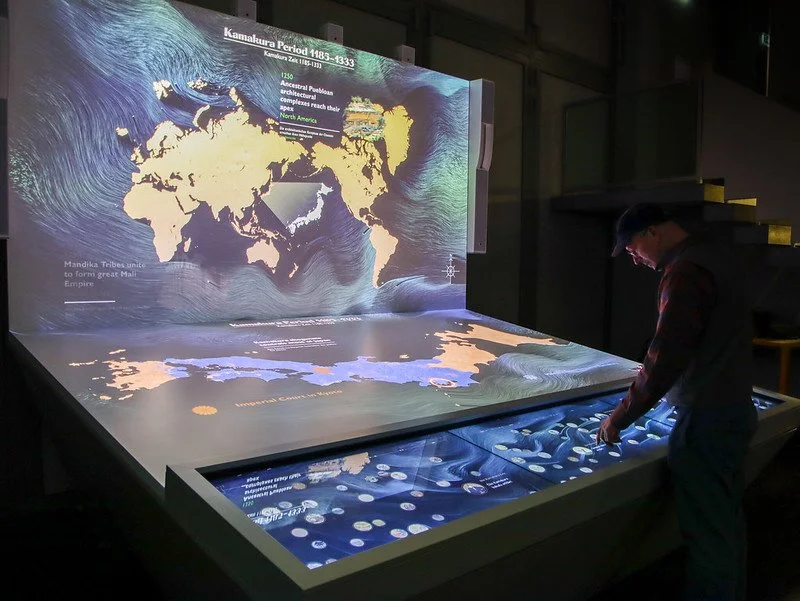
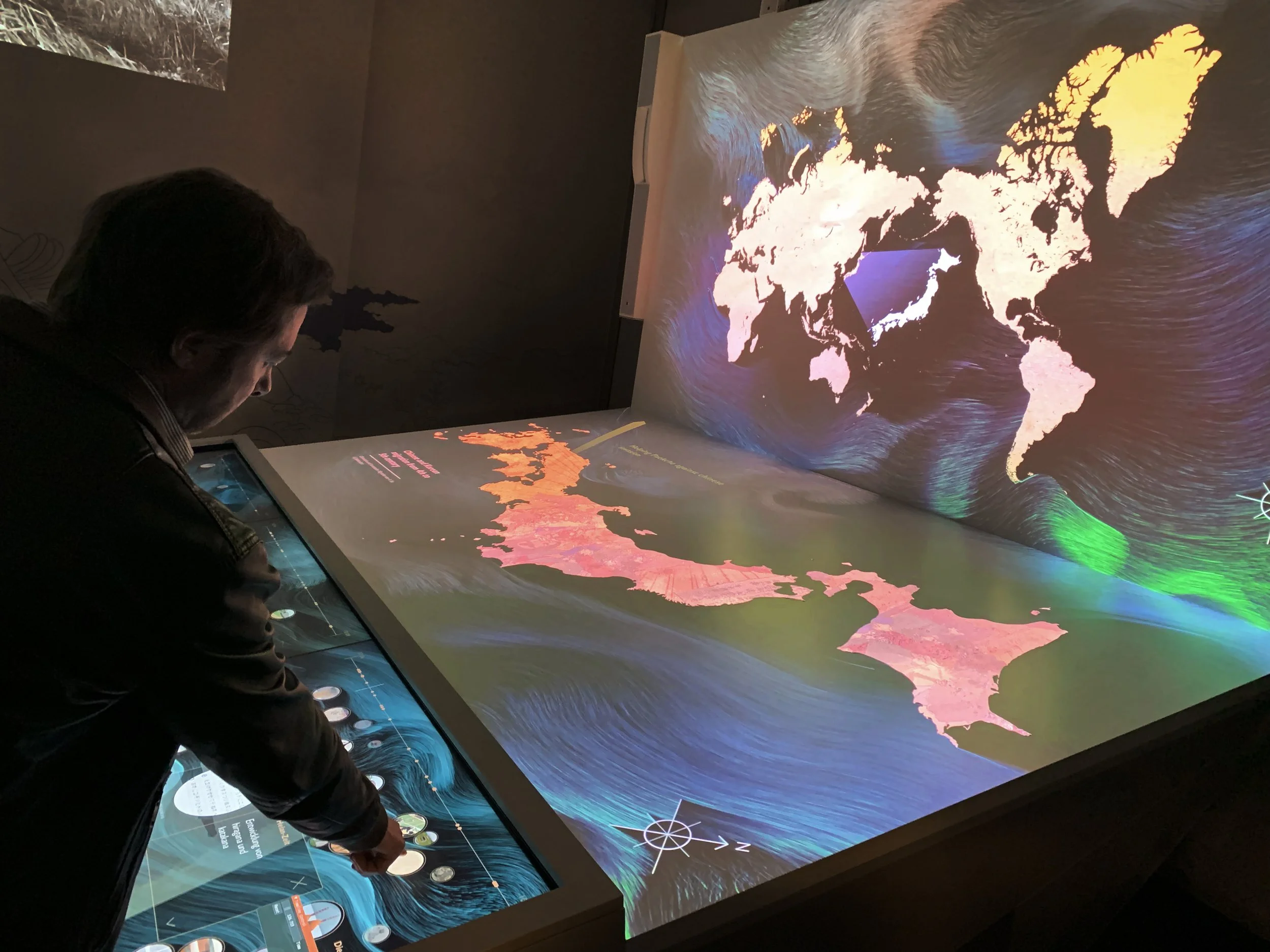
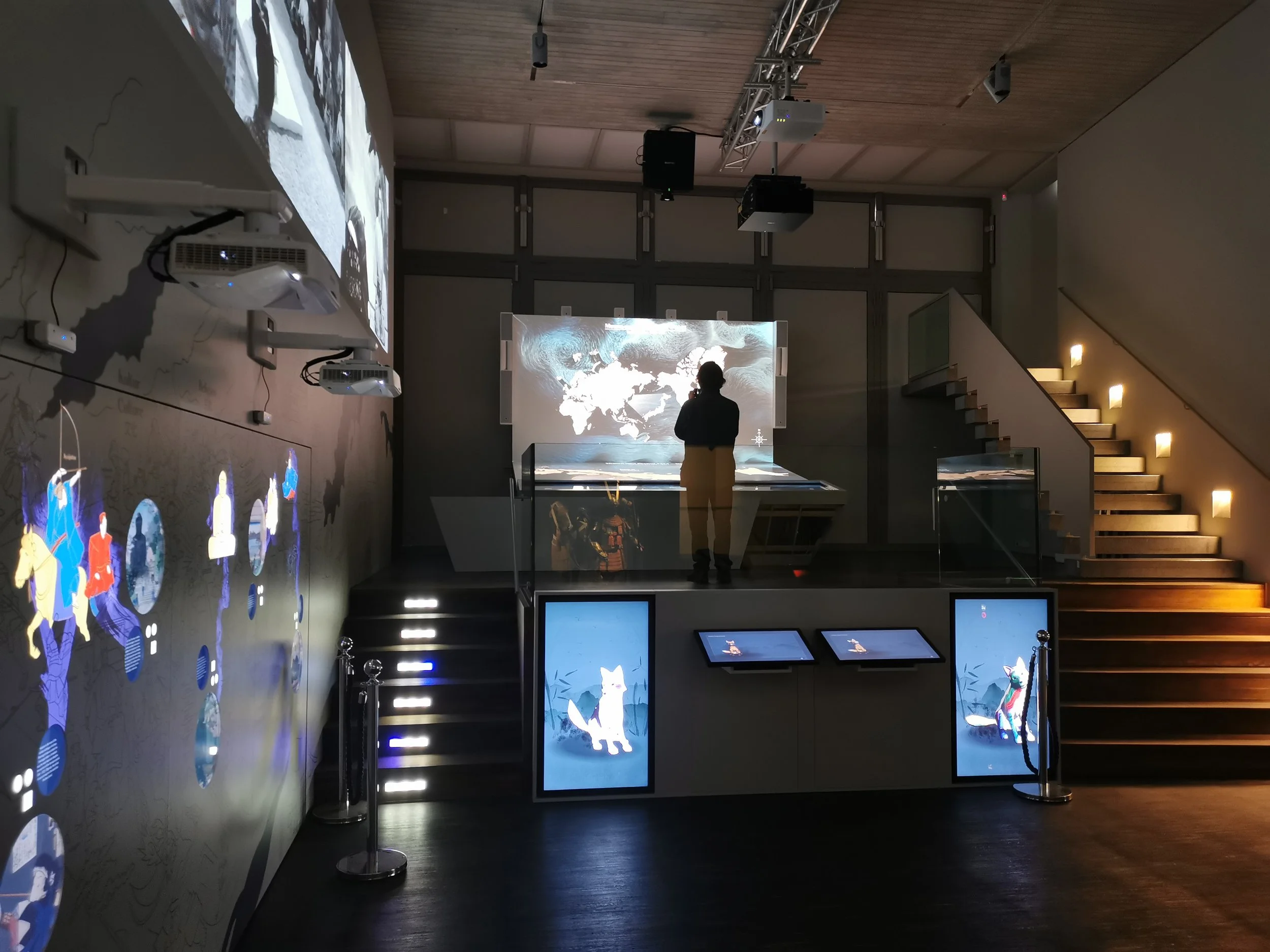
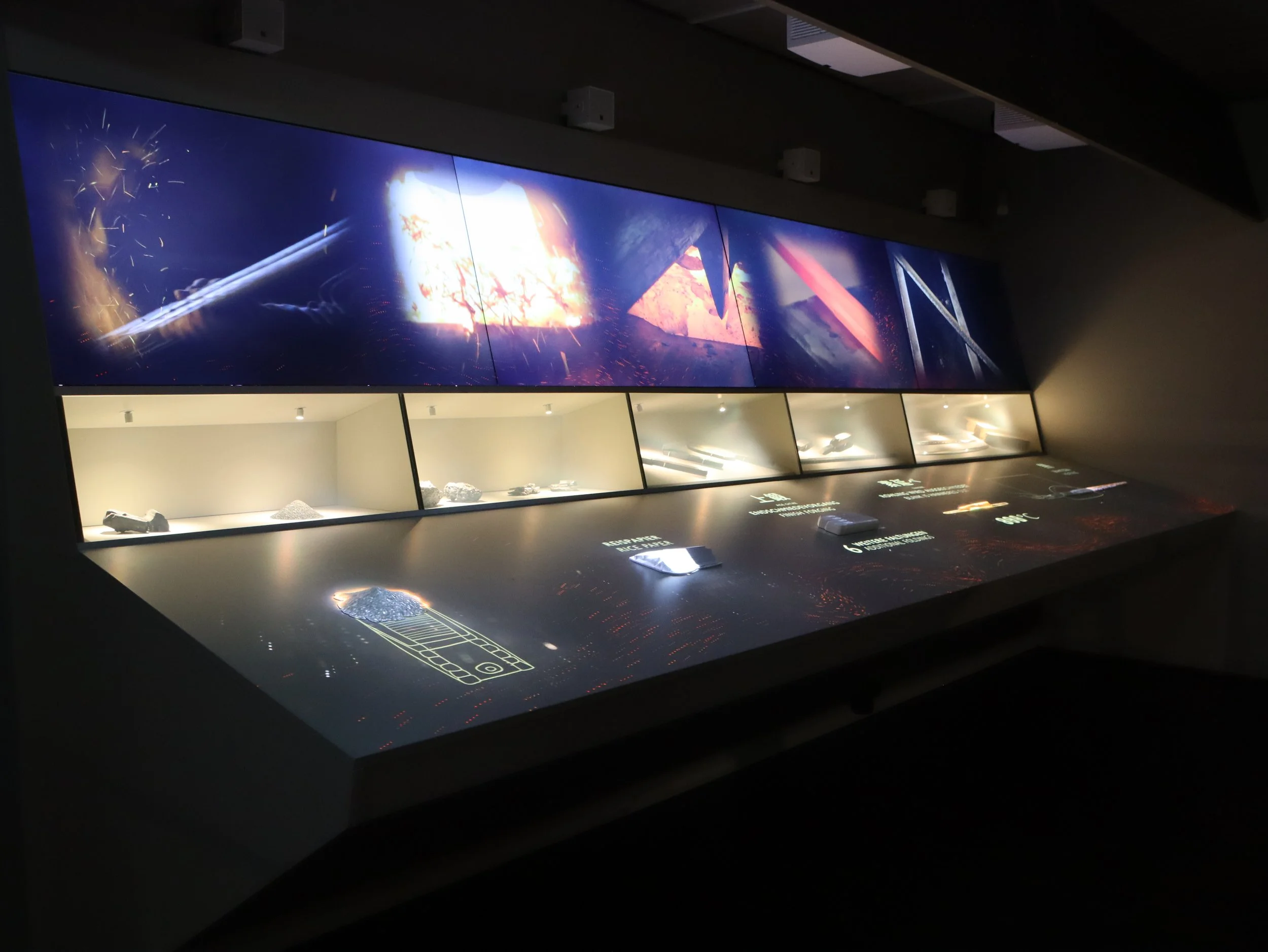
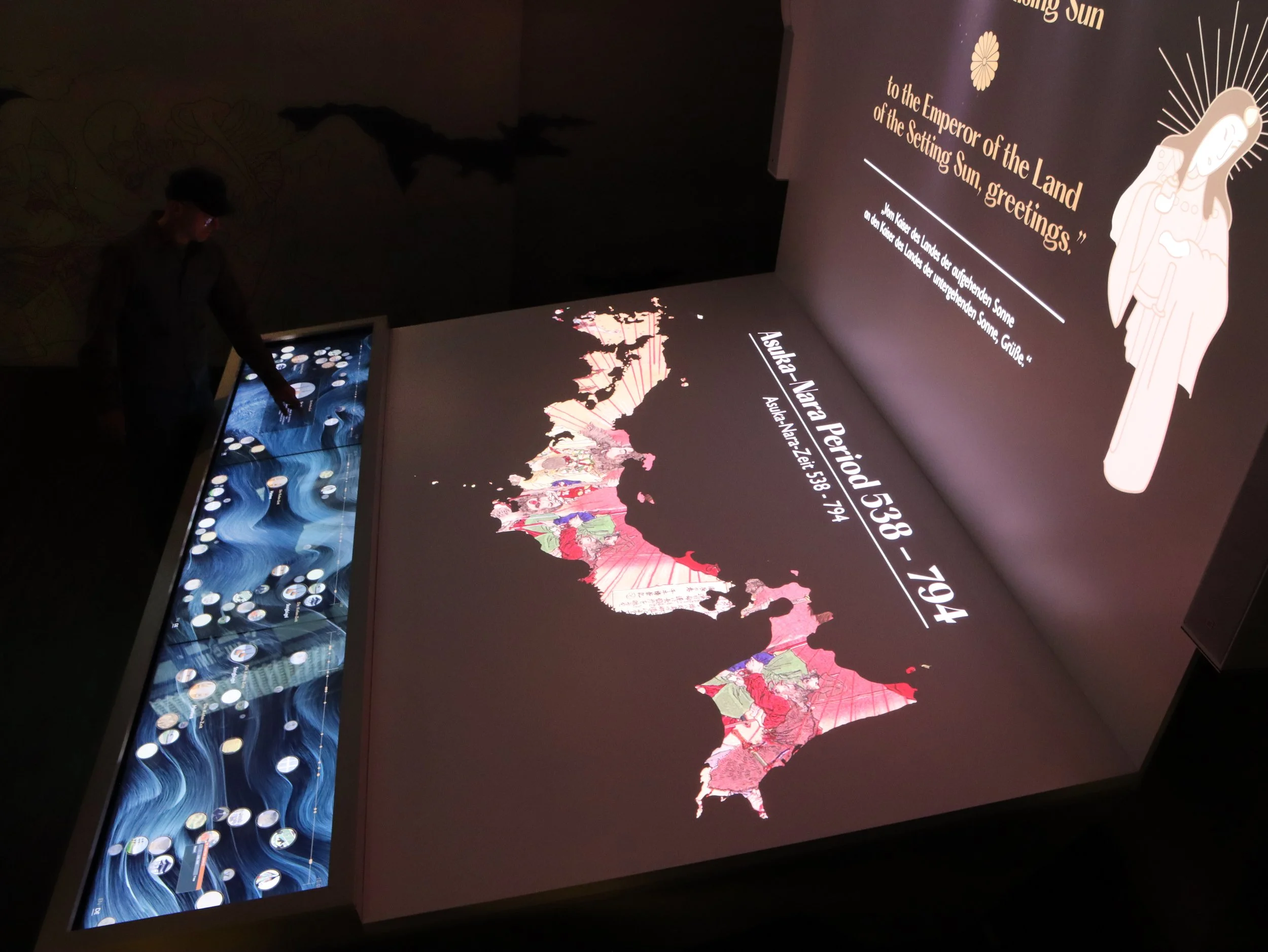
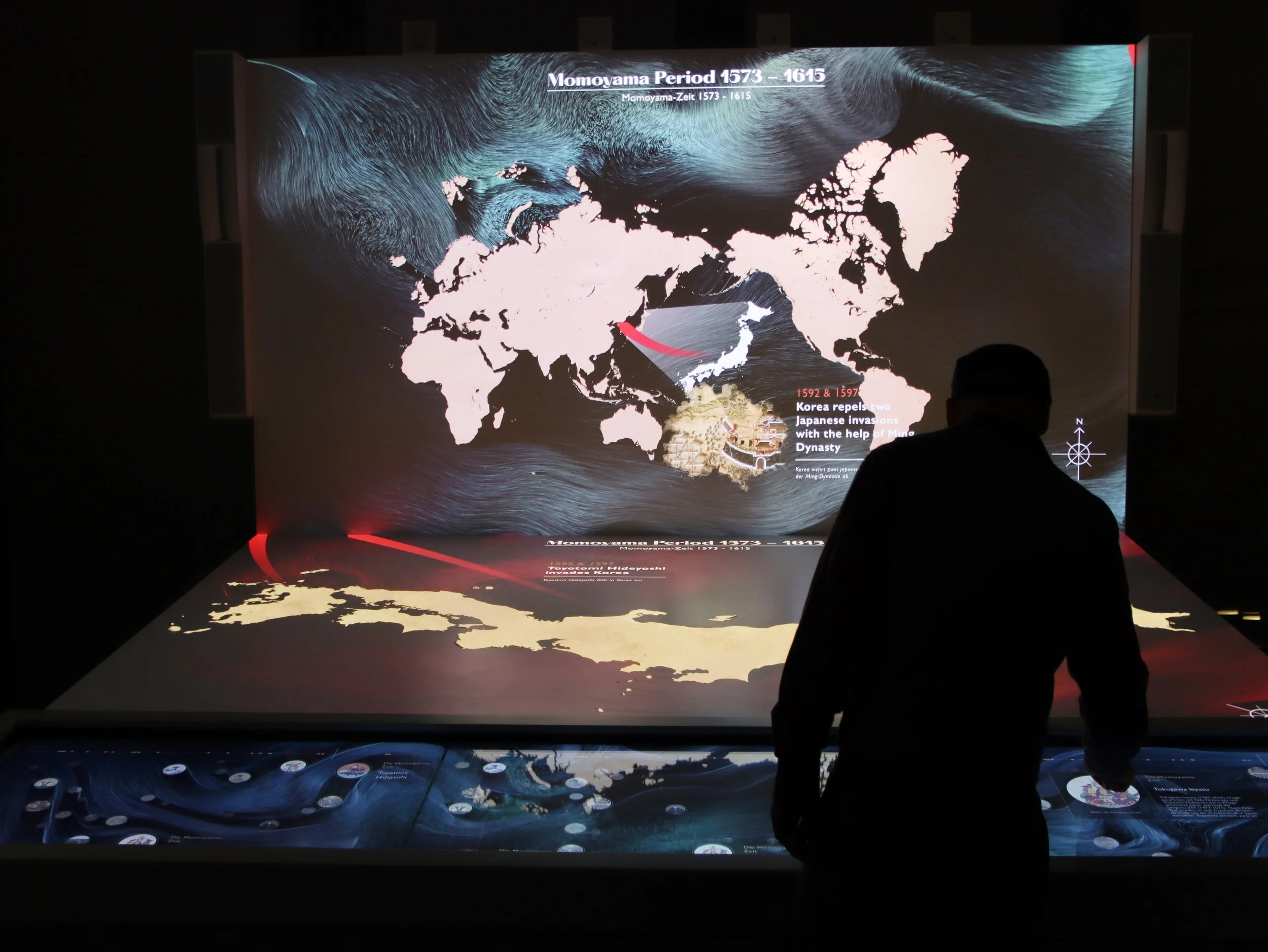
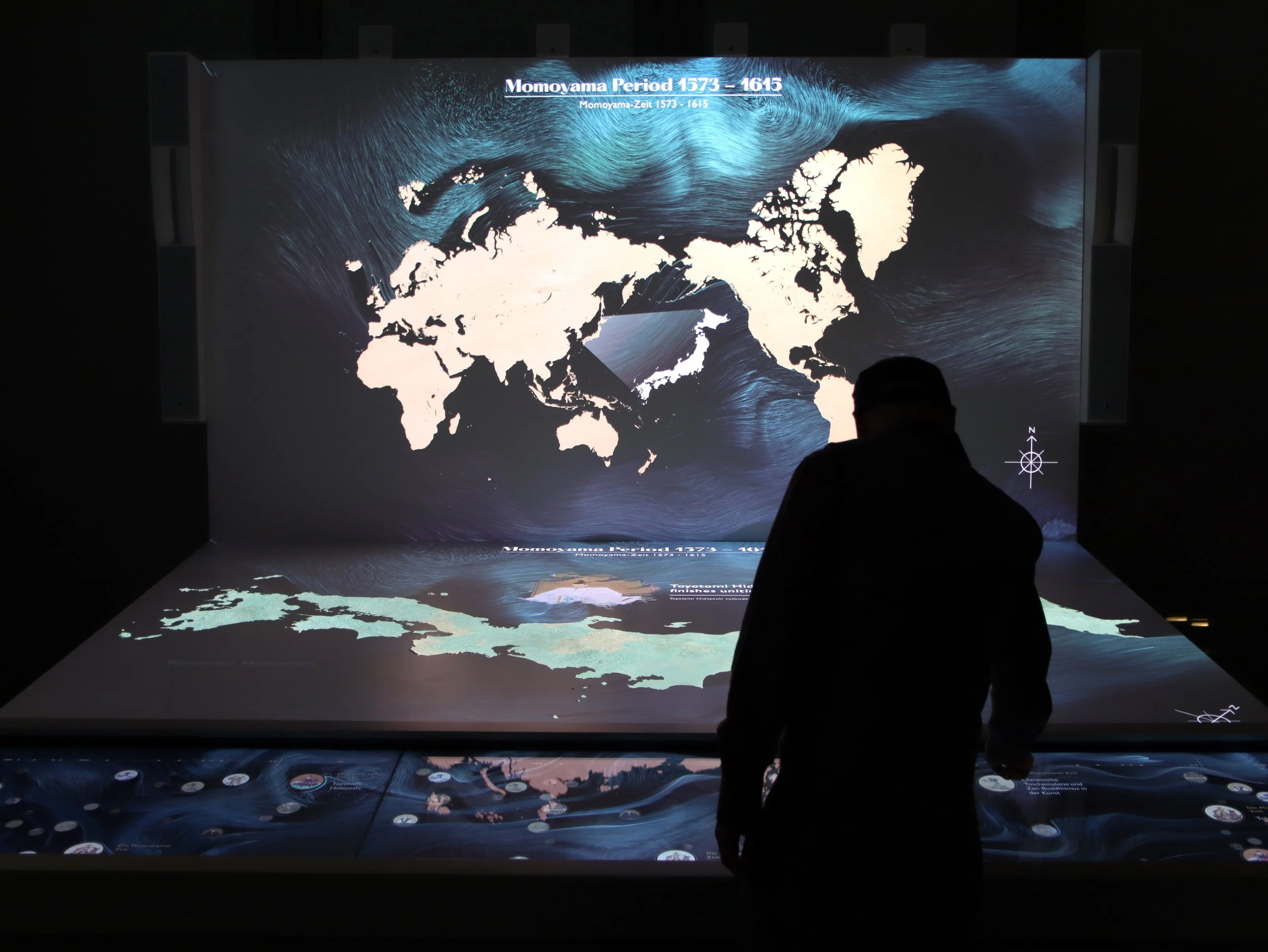
Image & Video Credits: My Trinh Müller-Gardiner & AES
Quisque iaculis facilisis lacinia. Mauris euismod pellentesque tellus sit amet mollis.